PRODUCTS

Doubler Girder OHC

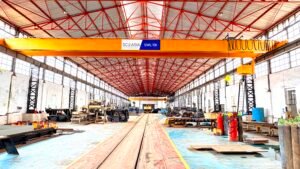
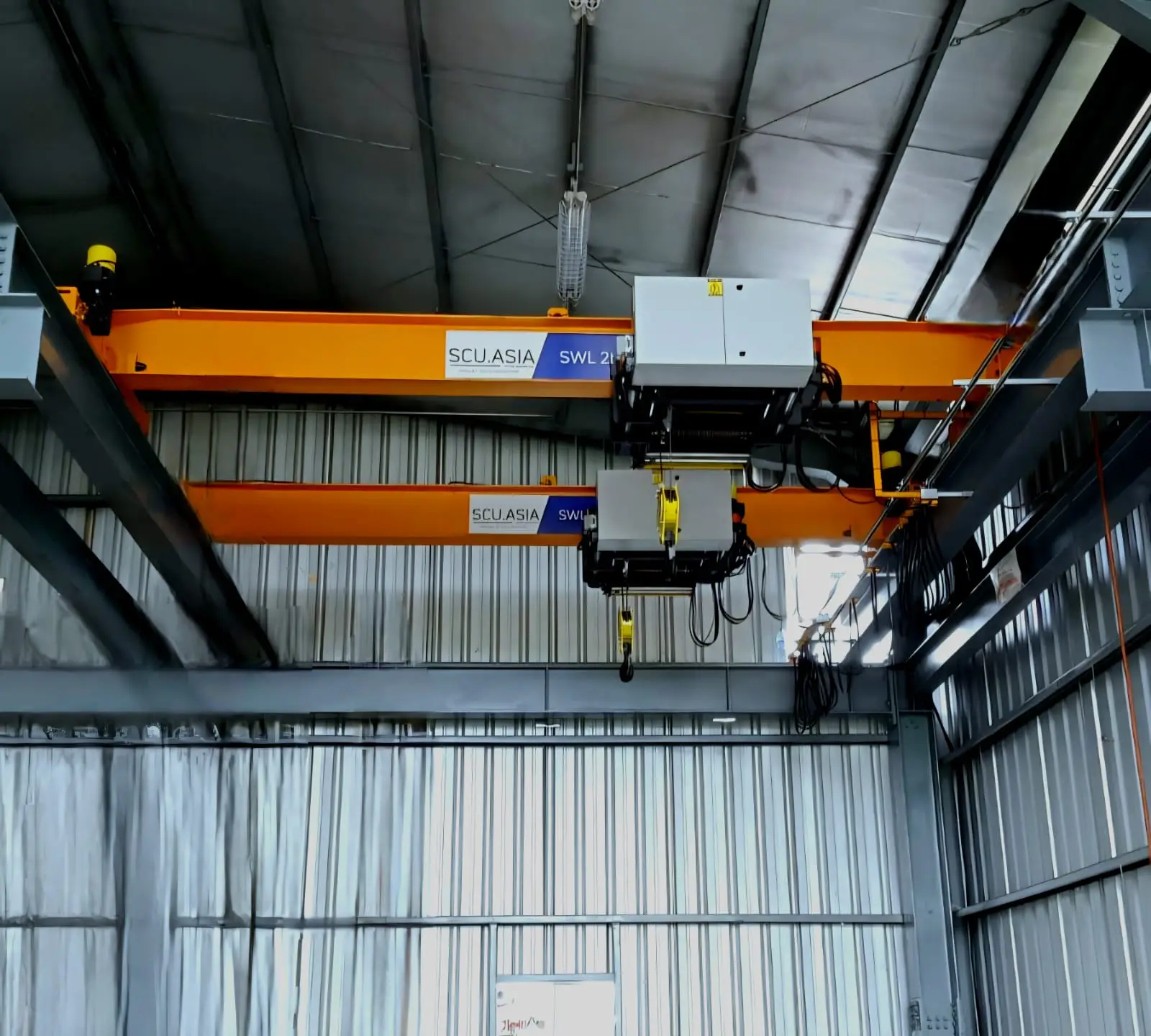
Double Girder Overhead Crane

Double Girder Overhead Crane

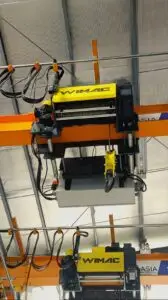
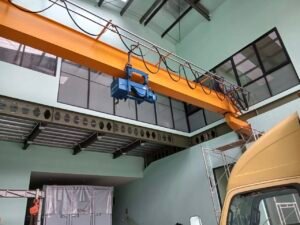
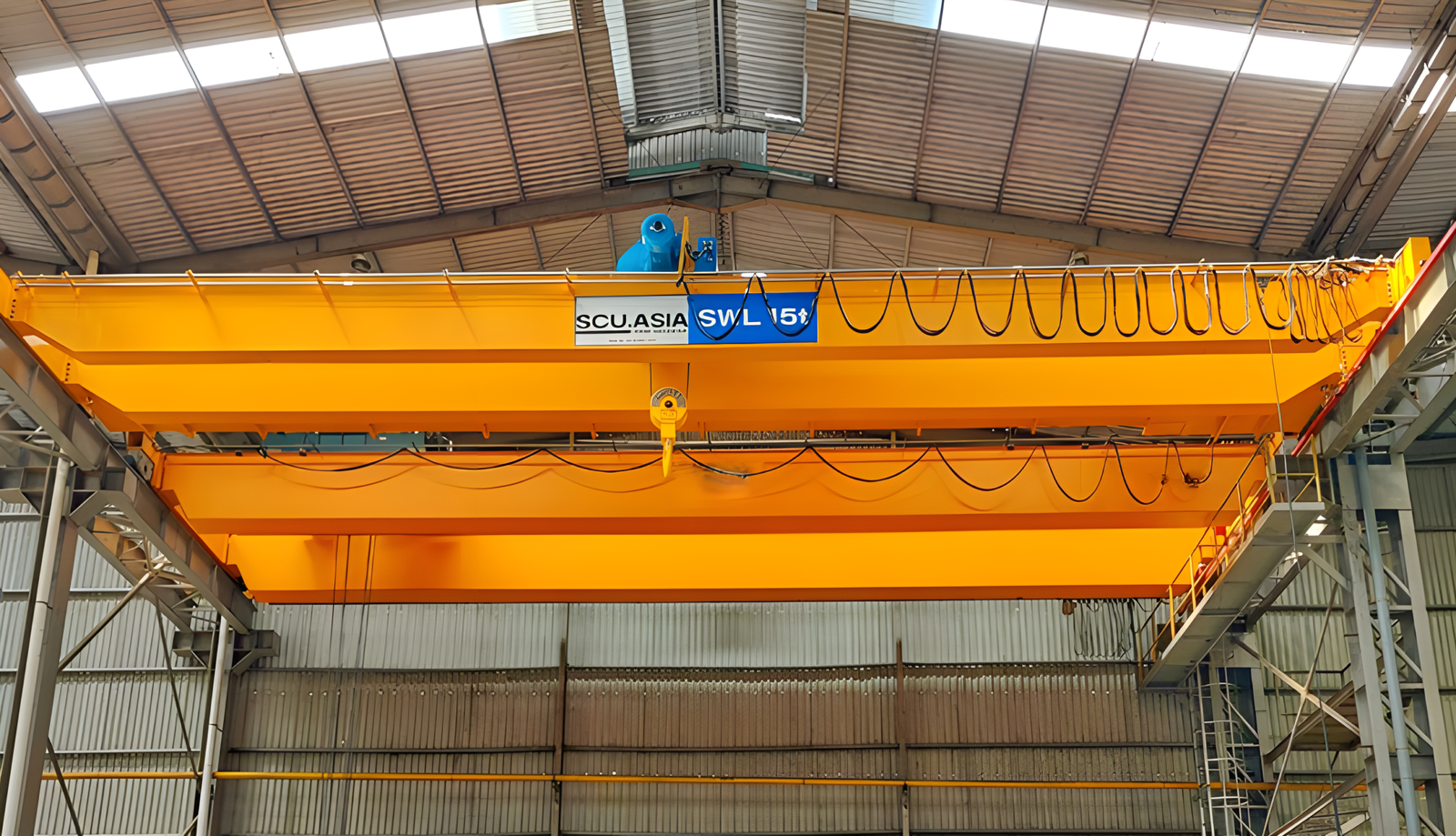
A Double Girder Overhead Crane represents a heavy-duty lifting solution engineered for higher capacities, wider spans, and increased hook height. Unlike the single girder version, this configuration utilizes two main bridge beams, providing enhanced structural stability for demanding industrial applications.

​Technical Specifications & Capabilities

  • Lifting Capacity: Typically utilized for heavy-duty requirements, generally ranging from 5 tons to over 100 tons.
  • Span Length: Capable of exceeding 30 meters, making it ideal for large-scale facilities.
  • 3-Axis Precision: Operates on a full XYZ coordinate system (Hoisting, Cross Travel, and Long Travel) for total workshop coverage.

​Comparison: Advantages & Limitations

Advantages

  • Superior Hook Height: Because the hoist is positioned on top of the two beams (top-running) rather than hanging below them, you gain significantly more vertical lifting space.
  • Extreme Durability: The twin-beam design offers maximum rigidity, making it suitable for high-speed operations and heavy-duty cycles (Class D, E, or F).
  • Enhanced Safety Features: Often equipped with maintenance walkways, platforms, and auxiliary hoists, allowing for easier and safer servicing.
  • Extended Span: The structural integrity of two girders allows for much wider coverage across large factory floors without compromising safety.

Limitations

  • Higher Initial Investment: Due to the increased amount of steel and more complex trolley design, the upfront cost is higher than a single girder crane.
  • Structural Load: The crane itself is heavier (higher dead weight), which requires a more robust building structure and stronger runway beams to support it.
  • Installation Complexity: Requires more time and specialized equipment to install the dual-bridge system.

Best Use Cases

​Double girder cranes are the industry standard for steel mills, foundries, heavy machinery manufacturing, and power plants where maximum lifting capacity and high-duty cycles are non-negotiable.
Single Girder Overhead Crane

Single Girder Overhead Crane

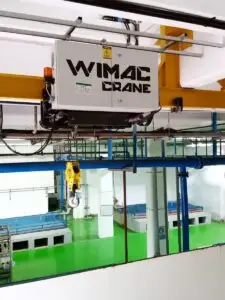
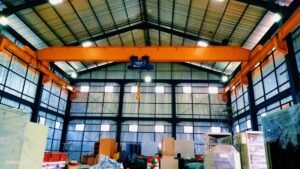
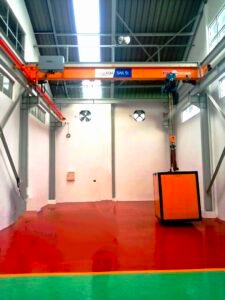
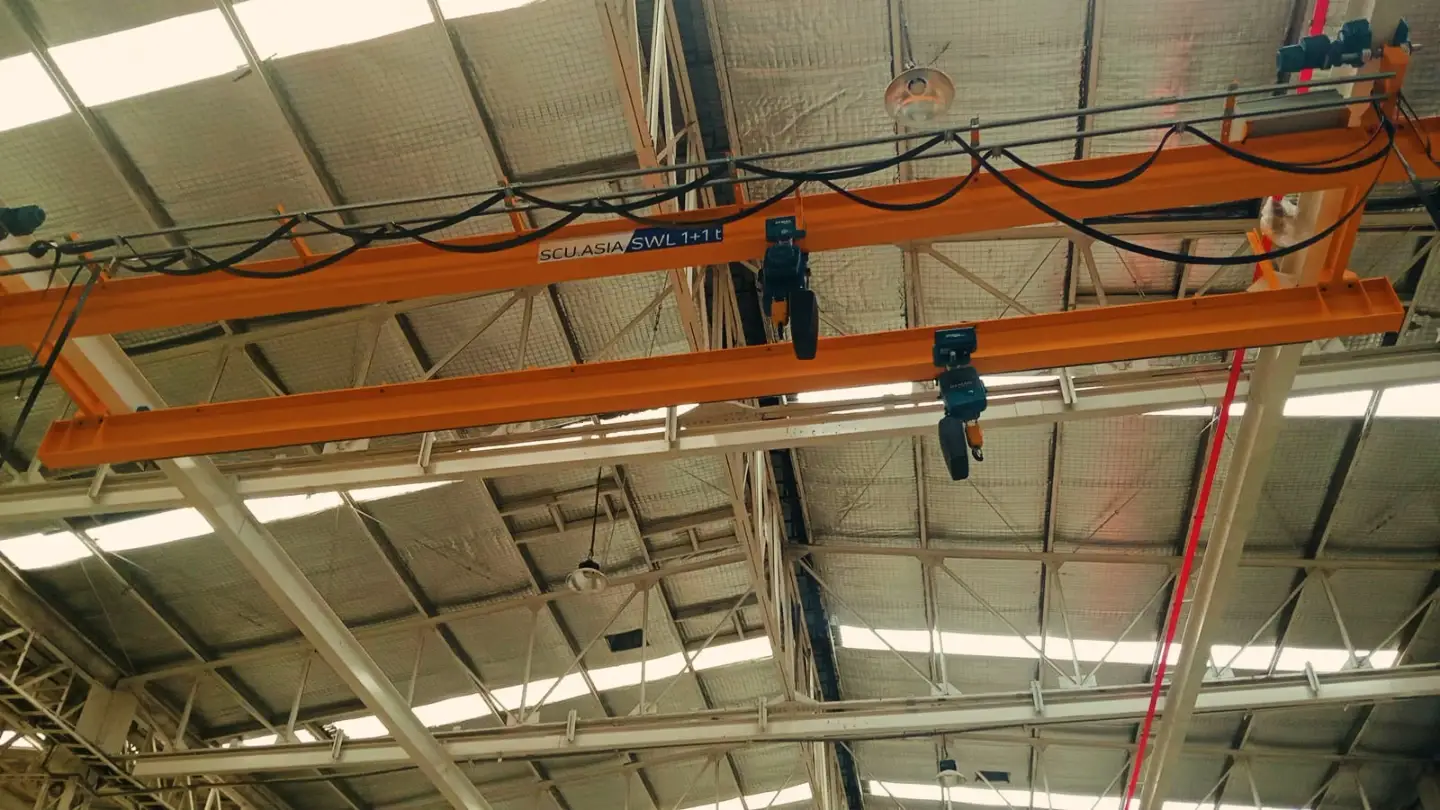
A Single Girder Overhead Crane is a highly efficient lifting solution designed for versatility and precision in industrial environments. Featuring a single robust bridge beam, this crane operates on a 3-axis movement system: vertical (Hoisting), lateral (Cross Travel), and longitudinal (Long Travel).

​Key Technical Specifications

  • Safe Working Load (SWL): Ideal for capacities ranging from 125 kg to 16 tons.
  • Maximum Span: Capable of reaching a bridge length of up to 29 meters.
  • Movement Profile: Provides full coverage of the workspace through its XYZ coordinate motion.

​Advantages and Limitations

Advantages

  • Comprehensive Coverage: The 3-axis design allows the crane to access almost every square meter of the designated work area, eliminating “dead zones.”
  • Cost-Effectiveness: Due to the single-beam design, it is lighter and requires less material, making it more affordable to purchase and install compared to double girder systems.
  • Low Maintenance: With fewer components and a simplified structure, routine inspections and upkeep are streamlined.
  • Lower Building Loads: The reduced dead weight puts less stress on the factory’s supporting pillars.

Limitations

  • Infrastructure Requirements: This system necessitates a dedicated runway structure (gantry beams and rails) to facilitate its longitudinal travel.
  • Headroom Constraints: Since the hoist is typically underslung (hanging below the beam), it may offer slightly less hook height compared to a double girder crane in buildings with very low ceilings.

Applications

​Single girder cranes are the preferred choice for workshops, warehouses, and assembly lines where reliable, medium-duty lifting is required. They offer the perfect balance between ergonomic handling and structural efficiency.
Single Girder OHC
Underslung Crane

Underslung Crane

Underslung Crane

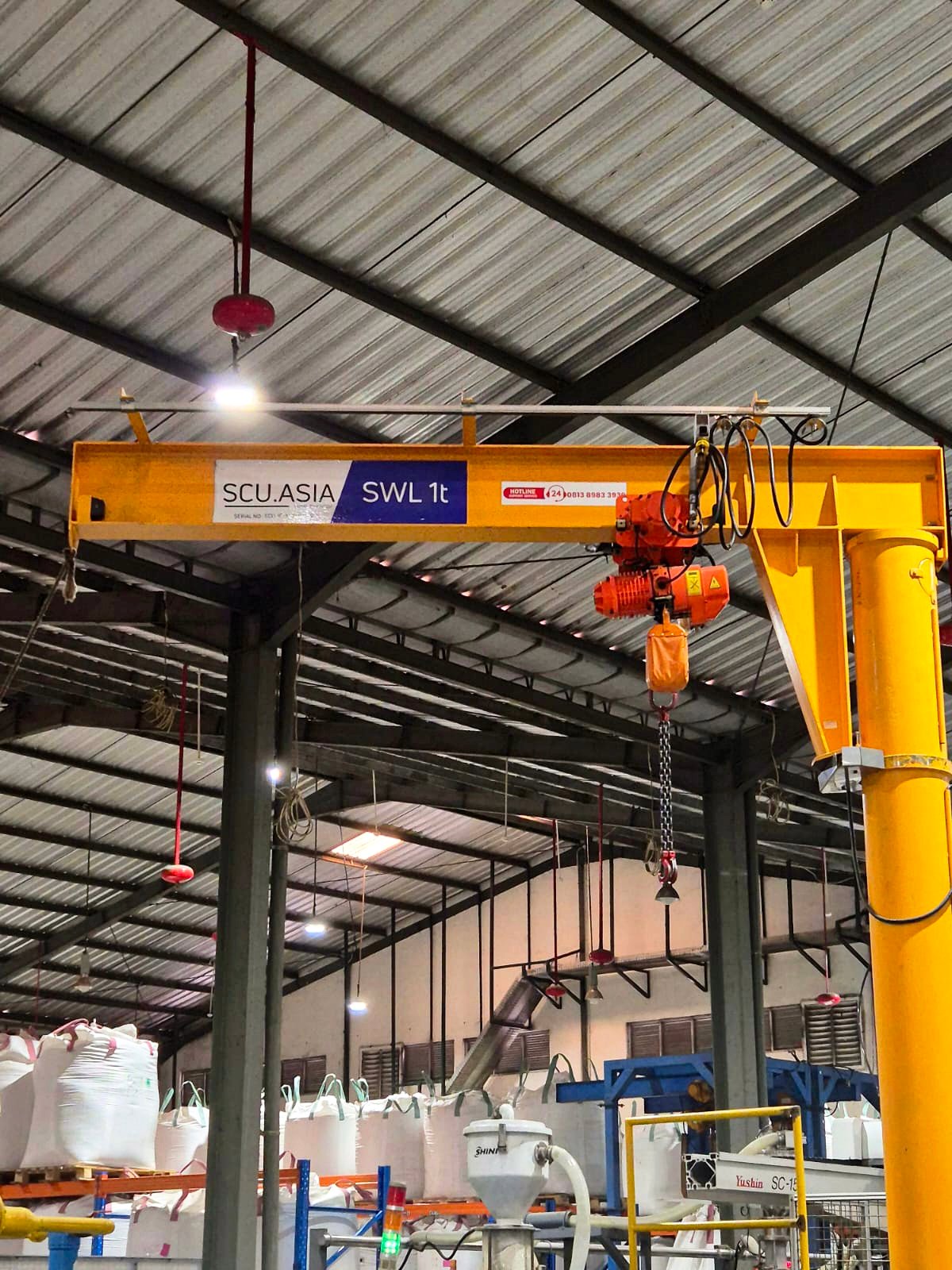
An Underslung Overhead Crane (also known as a Suspension Crane or Under-running Crane) is a specialized lifting solution where the end trucks travel on the bottom flange of the runway beams.

​Unlike top-running cranes that sit on rails mounted to brackets, this system is “suspended” from the roof structure or overhead beams, offering unique spatial advantages.

​Technical Specifications

  • Lifting Capacity: Engineered for light to medium-duty applications, typically ranging from 125 kg to 10 tons.
  • Optimal Span: Generally suitable for spans up to 25 meters.
  • 3-Axis Motion: Provides full movement coverage across the vertical (Hoisting), lateral (Cross Travel), and longitudinal (Long Travel) axes.

​Advantages and Limitations

Advantages

  • Maximization of Floor Space: Because the crane is suspended directly from the ceiling or roof trusses, it eliminates the need for floor-mounted support columns. This provides an unobstructed workspace for forklifts and machinery.
  • Superior Side Approach: The design allows the hoist to travel closer to the edges of the runway, ensuring maximum utilization of the building’s full width.
  • Cost-Efficient Infrastructure: In facilities with sufficient roof structural integrity, there is no need to invest in additional steel consoles or support pillars, significantly reducing installation costs.
  • Low Headroom Solution: Highly effective for buildings with limited vertical space, as the system profile is designed to be compact.

Limitations

  • Lower Load Capacity: These cranes are generally not intended for extreme heavy-duty lifting, as the total weight is supported directly by the building’s roof structure.
  • Reduced Hook Height: Since the entire bridge and hoist assembly hang below the runway rails, the maximum lifting height is typically lower than that of a top-running crane.
  • Maintenance Access: Servicing the wheel assemblies can be more complex compared to top-running systems, as the wheels are “tucked” into the bottom flange of the runway.

Application Profile

​Underslung cranes are the ideal choice for assembly lines, maintenance workshops, and manufacturing cells where floor space is at a premium and the building’s roof can support the suspended load.
Jib Crane

Jib Crane

Jib Crane

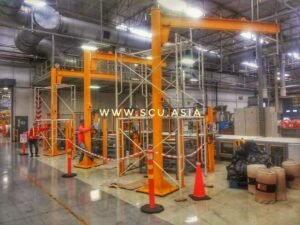
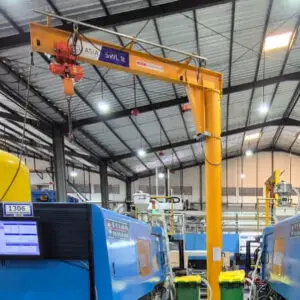
A Jib Crane is a highly versatile lifting system featuring a horizontal arm (jib or boom) that supports a moveable hoist. These cranes are designed for localized material handling and are often used to supplement larger overhead crane systems by providing dedicated service to individual workstations.

​1. Pillar Jib Crane (Freestanding)

​This is the most common type, featuring a vertical mast anchored to the floor.

  • Rotation: Full 360° rotation, allowing for maximum workspace coverage.
  • Capacity: Typically ranges from 125 kg to 16 tons.
  • Span: Up to 10–15 meters.
  • Key Advantage: Completely independent of the building structure; can be placed anywhere with a suitable foundation.

​2. Wall-Mounted Jib Crane

​This type is fixed to a wall or a building’s structural column.

  • Rotation: Limited to 180° – 200° (semi-circular).
  • Capacity: Usually up to 5 tons.
  • Key Advantage: Requires zero floor space, making it ideal for crowded workshops or narrow assembly lines.

​3. Wall-Traveling Jib Crane

​A unique variation that moves along a track mounted on the wall.

  • Movement: 3-axis (Long Travel along the wall, Cross Travel along the arm, and Hoisting).
  • Key Advantage: Can serve multiple workstations along the entire length of a building without obstructing the main overhead crane above it.

​4. Articulating Jib Crane

​Features a jib arm with two sections and a “knee” joint.

  • Rotation: 360° for the outer arm and up to 360° for the inner arm (if freestanding).
  • Key Advantage: Capable of reaching around corners, columns, or into machinery, providing superior maneuverability in tight spaces.

Professional Highlights

  • Ergonomics: Reduces physical strain on workers by handling repetitive lifting tasks.
  • Efficiency: Minimizes “wait time” for the main overhead crane by providing localized lifting power.
  • Compact Design: Ideal for facilities where a full bridge crane is not structurally feasible or necessary.
Monorail

Monorail Crane

Monorail Crane

A Monorail Crane is a specialized lifting system where the hoist and trolley travel along a single, stationary beam. Unlike bridge cranes that cover a rectangular area (X-Y movement), a monorail is designed for linear or point-to-point material handling.

​Technical Specifications

  • Lifting Capacity: Typically ranges from 125 kg up to 10 tons, though heavy-duty systems can reach 20 tons.
  • Movement Profile: Primarily 2-axis movement—Vertical (Up/Down) and Horizontal (Travel along the rail).


  • Track Configuration: Can be a simple straight line or complex paths with curves, slopes, and switches.


​Types of Monorail Cranes

1. Ceiling-Mounted Monorail

  • ​The rail is attached directly to the building’s ceiling or roof trusses.


  • Benefit: Completely eliminates floor obstructions and is ideal for facilities with limited floor space.


2. Freestanding Monorail

  • ​Supported by its own floor-mounted columns (often “H-Frame” or “T-Frame” structures).


  • Benefit: Used when the roof structure cannot support the weight or when the crane needs to be located in an area without overhead support.


3. Curved Path Monorail

  • ​Utilizes custom-engineered curved beams to navigate around obstacles or transport goods between different rooms/departments.

​Advantages and Limitations

Advantages

  • Cost-Efficiency: Significantly less expensive than a bridge crane because it uses only one beam and requires no bridge structure.


  • Space Saving: Its narrow profile makes it perfect for tight corridors or assembly lines where a bridge crane would be too bulky.


  • Customizable Path: Unlike overhead cranes that only move in straight lines, a monorail can follow the exact flow of your production line, including turns.


  • Automation Ready: Highly suitable for semi-automated or fully automated “track-and-trace” production systems.


Limitations

  • No Lateral Movement: It cannot move left or right outside of its fixed rail path. To change the path, you must install switches or branches.


  • Fixed Coverage: It only serves the area directly beneath the rail, making it less flexible than a crane that covers an entire workshop floor.

Best Use Cases

​Monorail cranes are the industry standard for assembly lines, painting booths, sandblasting stations, and transport between workstations.
Gantry Crane

Gantry Crane

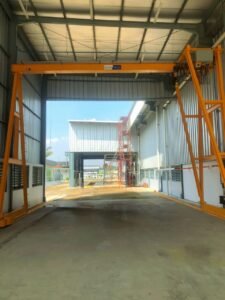
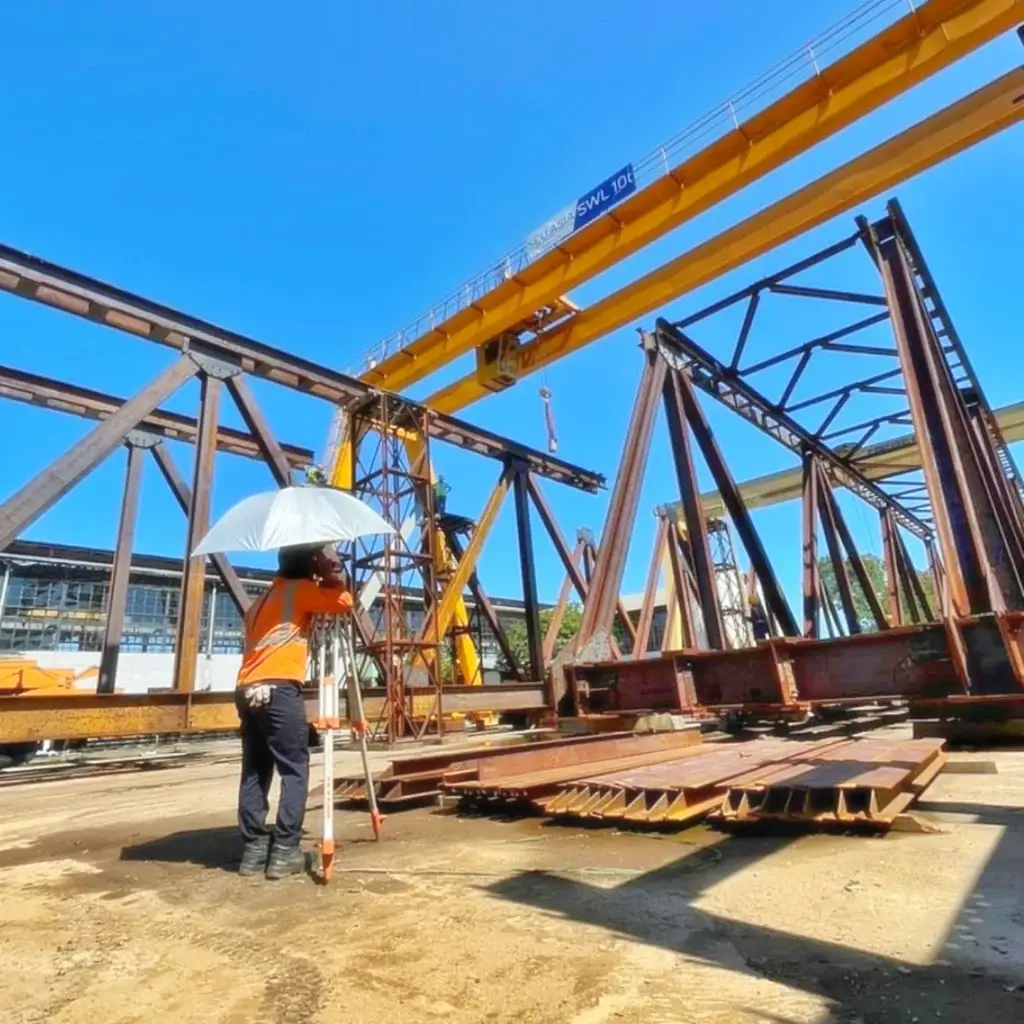
A Gantry Crane is a robust lifting system characterized by a bridge supported by freestanding legs. Unlike overhead cranes that rely on a building’s structure, gantry cranes travel on wheels or along a rail system embedded in the floor.

​Core Technical Profile

  • Lifting Capacity: Highly scalable, ranging from 500 kg (portable) to over 100 tons (industrial).
  • Environment: Ideal for both indoor and outdoor applications.
  • 3-Axis Movement: Standard longitudinal travel, lateral trolley travel, and vertical hoisting.

​Types of Gantry Cranes

1. Full Gantry Crane

​The most common heavy-duty configuration, featuring two legs that ride on floor-level rails.

  • Best for: Outdoor storage yards, shipyards, and large-scale steel fabrication.
  • Advantage: Completely independent of the building’s structure.

2. Semi-Gantry Crane

​A “hybrid” design where one side is supported by a floor leg and the other side travels on a runway beam mounted to the building’s wall or columns.

  • Best for: Saving floor space in narrow workshops or adding a secondary lifting layer beneath a larger overhead crane.
  • Advantage: Maximizes workspace by eliminating one row of floor tracks.

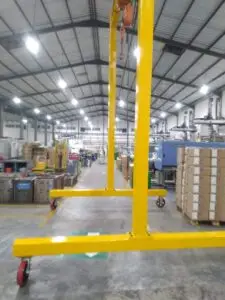
3. Portable / Mobile Gantry Crane

​A smaller, lightweight frame mounted on casters or rubber wheels.

  • Capacity: Typically 125 kg to 5 tons.
  • Advantage: Highly mobile; can be moved to different workstations as needed and stored away when not in use.

4. Adjustable Gantry Crane

​A variation of the portable type that allows for adjustable height and span.

  • Advantage: Extremely versatile for maintenance tasks where ceiling heights or workspace widths vary.

Advantages and Limitations

Advantages

  • No Runway Required: Eliminates the need for permanent overhead runway beams and supporting columns, reducing infrastructure costs.
  • Outdoor Versatility: Since they don’t need a ceiling, they are the primary choice for outdoor loading docks and rail yards.
  • High Capacity: Capable of handling significantly heavier loads than most single-girder suspension systems.
  • Rapid Installation: Generally faster to set up and easier to relocate to a new facility than traditional overhead cranes.

Limitations

  • Floor Space Usage: The tracks or wheels take up space on the floor, which can interfere with forklift traffic or material storage.
  • Safety Concerns: Ground-level rails require constant clearing to ensure no debris obstructs the crane’s path.

Leave a Reply

Your email address will not be published. Required fields are marked *